Medical
Certification for Medical Assistant: Your Complete Guide
Everything you need to know about certification for medical assistant careers — what it is, why it matters, and how Medical Assistant School prepares you for the CCMA exam.


If you’re considering a career change or looking for your first foothold in healthcare, understanding what a medical assistant is — and what the job actually involves day-to-day — is the right place to start.
Here’s a direct, complete answer to that question, along with what training looks like, what the work pays, and how to get started.
A medical assistant is a healthcare professional who works in clinical settings — physician offices, urgent care clinics, specialty practices, and hospital outpatient departments — performing both clinical and administrative tasks. Medical assistants are not nurses or physicians, but they’re not just receptionists either. They’re the people who keep patient care moving.
On any given day, a medical assistant might:
The job sits at the intersection of clinical work and patient care coordination — and it’s one of the most consistently in-demand positions in healthcare.
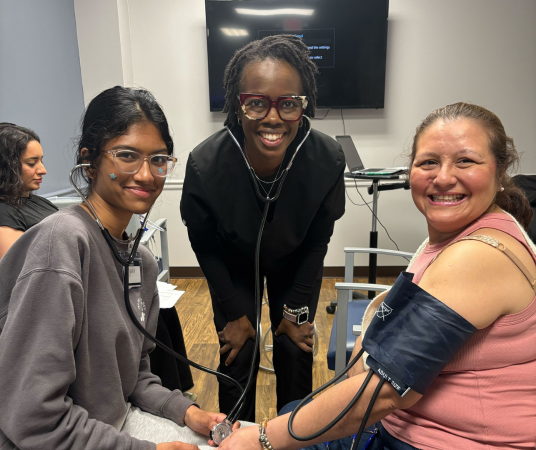
Vital signs and patient intake
Phlebotomy
Injections
EKG/Electrocardiography
Point-of-care testing
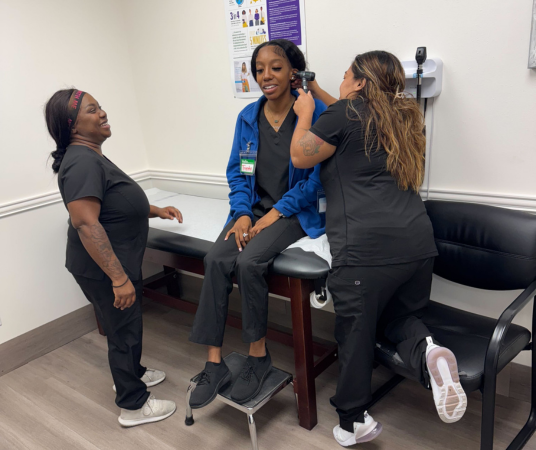
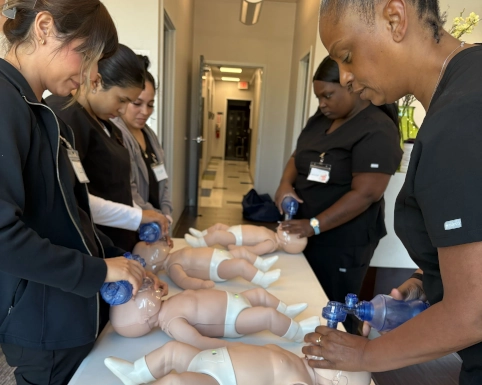
Clinical procedures
Medical assistants handle significant front-office and records work, especially in smaller practices:
Medical assistants are employed across a wide range of settings:
According to the Bureau of Labor Statistics, the national median salary for medical assistants is approximately $45,690 per year (roughly $21.97 per hour). Salary ranges by experience and setting:
| Experience Level | Typical Annual Salary |
|---|---|
| Entry-level (0–1 year) | $33,000–$38,000 |
| Mid-level (2–4 years) | $38,000–$45,000 |
| Experienced (5+ years) | $45,000–$55,000+ |
| Specialty offices | Often higher than primary care |
Factors that can affect pay: specialty practice type, CCMA or other certifications, expanded functions training, and geographic market.
The Bureau of Labor Statistics projects 13% growth in medical assistant employment through 2035 — nearly double the national average for all occupations. This growth reflects:
In practical terms: the demand for qualified medical assistants is strong and growing across nearly every healthcare market in the country.
While certification requirements vary by state and employer, the Certified Clinical Medical Assistant (CCMA) credential — awarded by the National Healthcareer Association (NHA) — is one of the most widely recognized in the field. It tests clinical and administrative competency across the full scope of a medical assistant’s responsibilities.
Other common credentials include:
Certification consistently improves hiring outcomes and starting pay — employers use it as a reliable signal of verified competency.
A focused, career-oriented program like the one at Medical Assistant School takes 18 weeks — roughly four to five months. That includes clinical skills training, administrative training, externship in a real medical setting, and CCMA certification preparation.
Compare that to a 2-year community college program covering the same core competencies — and the difference is significant. An 18-week graduate enters the workforce 18 months earlier, with 18 more months of salary and experience before a 2-year graduate has finished their program.
Medical Assistant School offers an 18-week medical assistant program designed for students with no prior clinical experience. Hands-on training, externship placement in local medical offices, and CCMA certification prep are all included.